
Criminal Court Cases in Avery County
Avery County criminal court cases use North Carolina's unified trial-court system. Superior Court hears felony trials. District Court handles misdemeanors, infractions, and the first stages of felony matters. Both divisions keep their Avery County case files through the Clerk of Superior Court in Newland. The county sits in Superior Court District 35, District Court District 35, and Prosecutorial District 35. A town police charge from Banner Elk or Newland does not go to a separate municipal criminal court. Once filed, it enters the same District or Superior Court structure.
The North Carolina Judicial Branch Avery County hub connects court users with calendars, forms, services, and local contacts. The clerk is the custodian for pleadings, docket entries, judgments, and copies. The arresting agency still holds its own incident narrative, while the jail holds a booking record. Those documents may refer to one event, but none substitutes for the Avery County court case file and its final disposition.
Avery County Court Case Divisions
The court division tells a reader where the Avery County case stands. A misdemeanor may remain in District Court through trial and judgment. A felony can begin before a magistrate and in District Court, then move to Superior Court after indictment or another authorized charging step. That move does not mean two unrelated prosecutions exist. The docket, charge rows, and case number help connect each stage.
| Court division | Avery County criminal work | Useful record clue |
|---|---|---|
| District Court | Misdemeanors, infractions, and preliminary felony matters | Early hearings, lower-level charge outcomes, and release proceedings |
| Superior Court | Felony cases after indictment or other proper transfer | Arraignment, motions, plea or trial, judgment, and sentence |
| Magistrate process | Initial process, probable-cause steps, and release conditions | Warrant or magistrate order linked to the later court file |
Use the division shown in eCourts when asking the clerk for a copy. It gives the records staff a far better starting point than a broad name request.
Avery County Case Record Searches
The North Carolina eCourts Portal is the main remote search channel for Avery County court cases. North Carolina completed the statewide move to Enterprise Justice/Odyssey in 2025. Public screens can change, and registered users may see document options that anonymous users do not. Search results are useful indexes, but the clerk remains the source for a missing image or a certified copy.
- Open Portal and review its current public-search notice.
- Enter the full record number when known. Otherwise, use the person's legal name.
- Select Avery County and the criminal or infraction case type to reduce unrelated matches.
- Compare court location, filing date, offense date, and each charge row before accepting a match.
- Ask the Avery County clerk for the file or certified copy when a document is absent online.
The public interface commonly offers these Avery County case-search controls. Not every field is required, and the live screen controls current options.
| Field label | Type | Required | Notes |
|---|---|---|---|
| Record Number | Text | Optional | Best choice when the full case number is known |
| Last Name | Text | Conditional | Use the legal spelling and verify same-name matches |
| First / Middle Name | Text | Optional | Narrows a person search |
| Business Name | Text | Optional | Usually not relevant to a defendant search |
| County | Dropdown | Optional | Select Avery for local court cases |
| Location | Dropdown | Optional | Filters court location where the screen offers it |
| Case Type | Filter | Optional | Choose criminal or infraction where offered |
| Date Range | Date controls | Optional | May apply to filing, event, or calendar screens |
| Search | Button | Not applicable | Runs the query |
| Clear / Reset | Button | Not applicable | Removes the entered criteria |
Avery County eCourts Case Limits
A Portal entry can identify an Avery County case even when its document image is unavailable. Sealed and confidential matters will not appear, while older or non-digitized files may still require staff retrieval. Anonymous and registered access can also differ. When the index shows a case but not the paper needed, record the case number, division, and filing date. Then call the clerk at 828-737-6700 before a trip to Newland.
The North Carolina Court Dates search serves a different need. It can locate a scheduled session by defendant name, citation or case number, county, and date criteria. A calendar tells when court is set. It does not prove how a charge ended. Avery County case outcomes must be read from the disposition for each charge, not inferred from a past or missing calendar date.
Note: A court date answers when a matter is scheduled, while the Avery County docket records what the court actually did.
What a Criminal Case File Contains
An Avery County criminal case file centers on prosecution and outcome. It can show the court division, filing events, charge details, attorneys when entered, hearings, and judgment. Financial entries may include fines, costs, or restitution. Public access does not include protected identifiers, confidential victim or minor data, or sealed material. Each charge can have its own status, so the overall case label should never replace a row-by-row review.
| Case Number & Court | Identifies the Avery County file, location, and District or Superior Court division. |
|---|---|
| Charging Document | Shows the filed accusation, such as a warrant, information, or indictment when public. |
| Docket Entries | Lists filed events, orders, notices, and procedural activity. |
| Hearing Dates | Records sessions and scheduled appearances without proving the final outcome. |
| Disposition & Judgment | States the result for each charge, including dismissal, acquittal, plea, or conviction. |
| Sentence & Conditions | Shows the court-ordered penalty, supervision, costs, restitution, or other terms when public. |
The Judicial Branch explains the official criminal record search options. Its source image shows why a certified county search and a public docket review answer related but distinct questions.
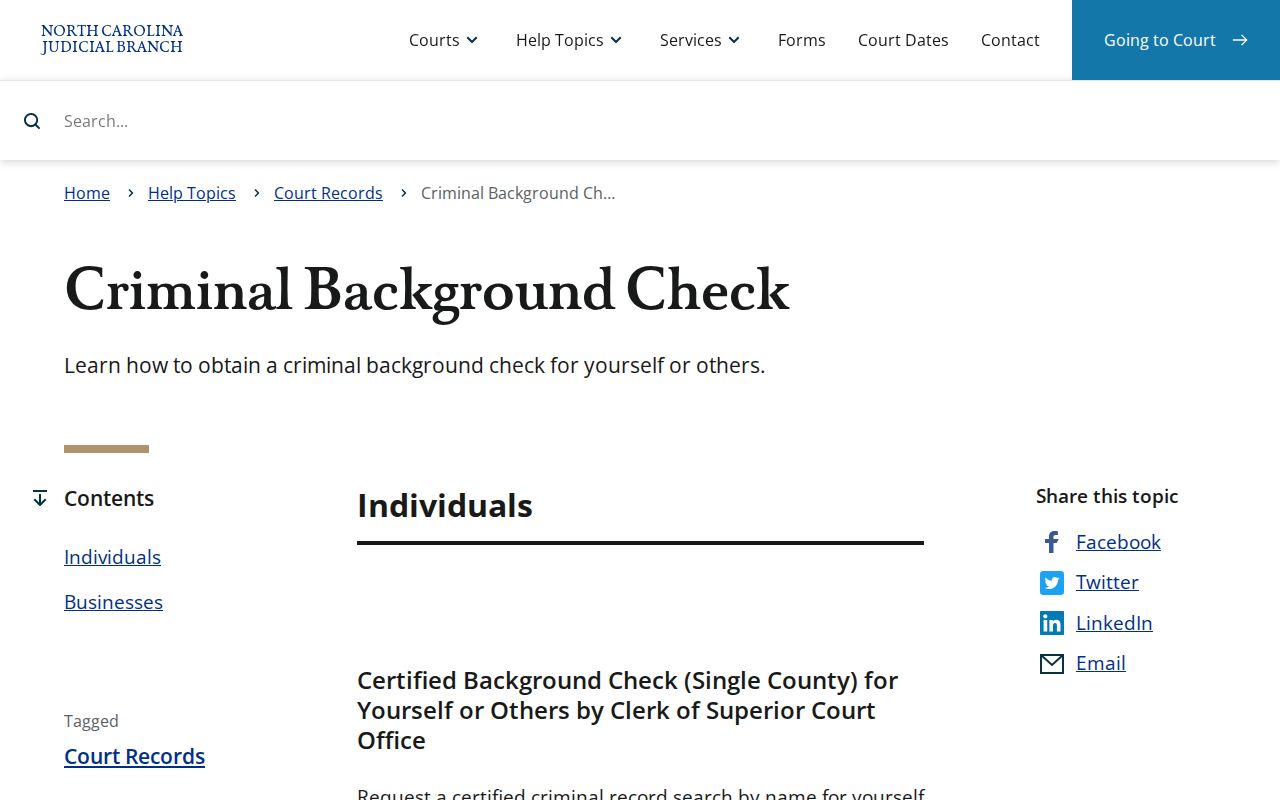
For a single Avery County case, the file number and charge-level disposition remain the most precise trail.
Avery County Case Dispositions
Disposition means the court's outcome for a charge. A dismissal ends that charge without a conviction. An acquittal is a not-guilty determination. A conviction is a judgment of guilt. Nolle prosequi means the prosecutor chose not to proceed with that charge at that time. A prayer for judgment continued is a North Carolina result in which judgment is continued, and its effect depends on the legal context. These terms are not interchangeable.
- Active
- The Avery County charge or case remains unresolved.
- Disposed
- The court has entered an outcome, which must still be read by charge.
- True bill
- A grand jury returned an indictment supporting a felony charge.
- No bill
- A grand jury declined to return an indictment.
- Concurrent
- Sentences run together rather than one after the next.
- Consecutive
- Sentences run one after another.
A multi-charge Avery County court case can mix outcomes. One count may be dismissed while another produces a plea and sentence. Read every charge row and confirm the certified judgment when the exact result matters.
Criminal Case Stages in Avery County
A criminal matter may begin with legal process or a warrantless arrest. A magistrate then addresses initial process and release conditions. District Court handles misdemeanor cases and the early phases of felony cases. The prosecutor may dismiss a charge, proceed by plea, or seek an indictment. An indicted felony moves through Superior Court for arraignment, motions, plea or trial, disposition, and sentencing. Appeals produce a further record when filed.
Case flow: Charges Filed › Arraignment › Pretrial › Plea or Trial › Disposition › Sentencing
The earlier Avery County arrest record describes custody and booking, while this court sequence shows what happened after charges entered the state case system. Timing gaps can leave a booking visible before a new Avery County case appears.
Avery County District 35 Rules
The Avery County local rules and forms page adds context that a bare docket cannot supply. It links District 35 criminal Superior Court rules, a district pretrial-release policy, technical corrections, a District Court continuance form, and an order concerning search warrants issued by two-way video conference. These materials explain procedure. They do not change the disposition recorded in a particular file.
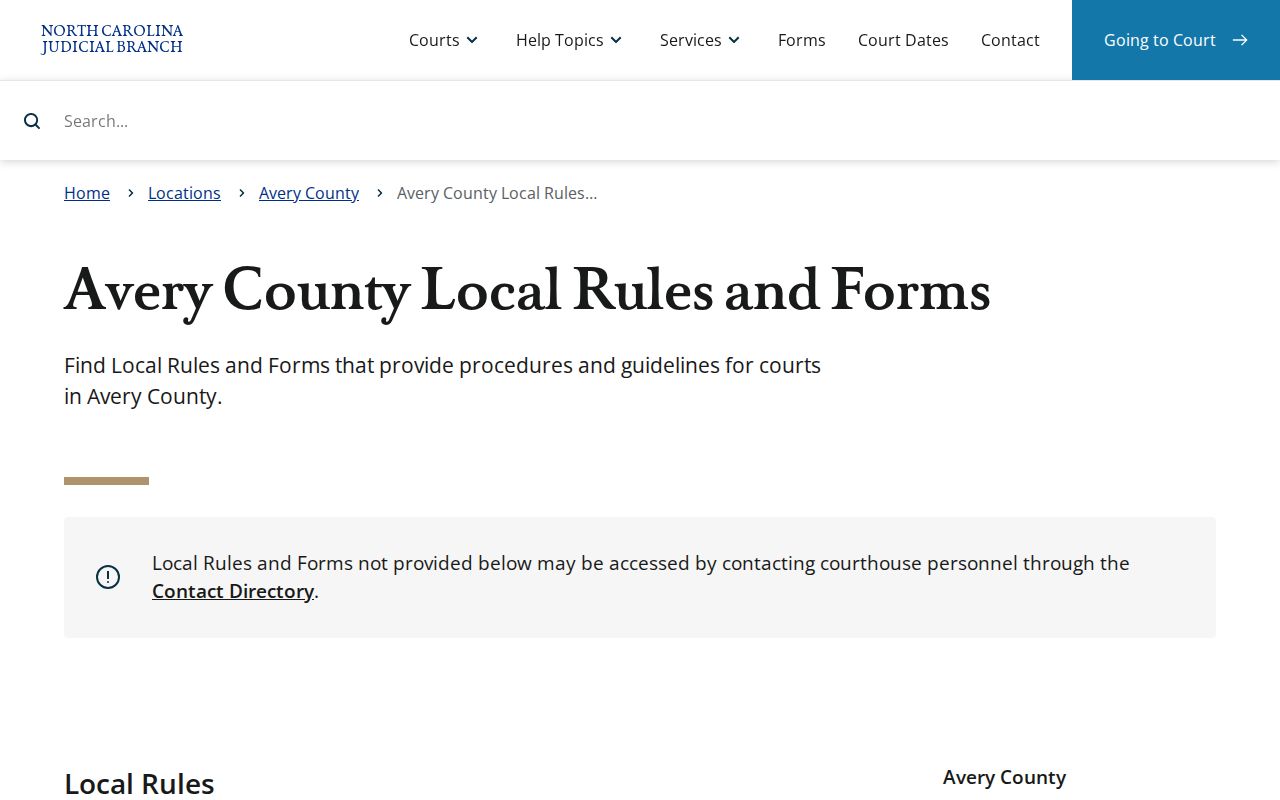
The image points readers to the local procedural layer that should be read beside, not instead of, the Avery County docket.
The SBI crime statistics program offers a different statewide view of reported agency data.
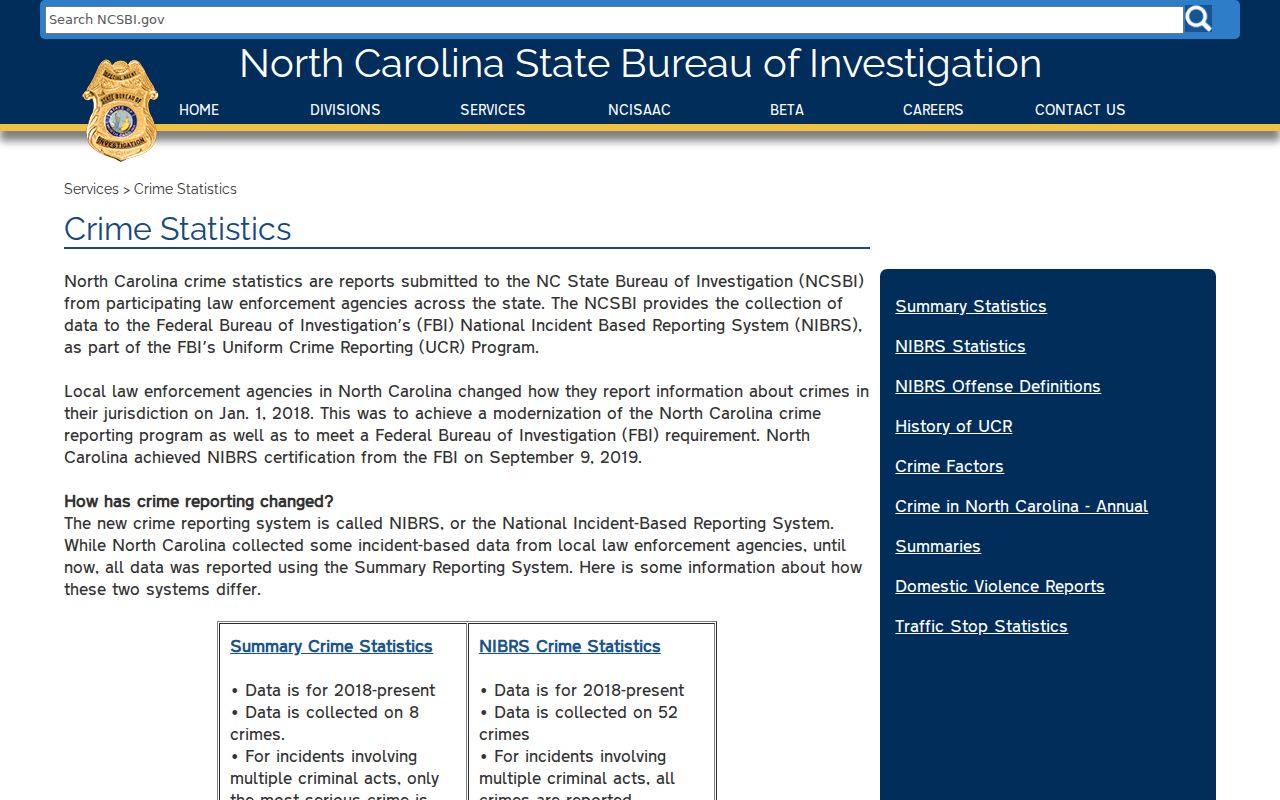
Aggregate crime counts cannot show whether any Avery County charge led to conviction, dismissal, or acquittal. Only the court case can answer that.
Avery County Certified Case Searches
A certified name-based search is available from the Avery County Clerk with form AOC-CR-314. The fee is $25, and the result covers Avery County only. A mailed request uses a money order or certified check, not a personal check. In-person payment may be made by cash, credit or debit card with processing fees, money order, or certified check. A free courthouse terminal search can cover one county or the state, but that result is noncertified.
Avery County Clerk of Superior Court
200 Montezuma Street
Newland, NC 28657
Mail: PO Box 115
828-737-6700
Monday-Friday, 8:00 a.m.-4:30 p.m.
The official FBI electronic Identity History Summary portal is for a person's own fingerprint-based FBI history, not an Avery County pleading file.
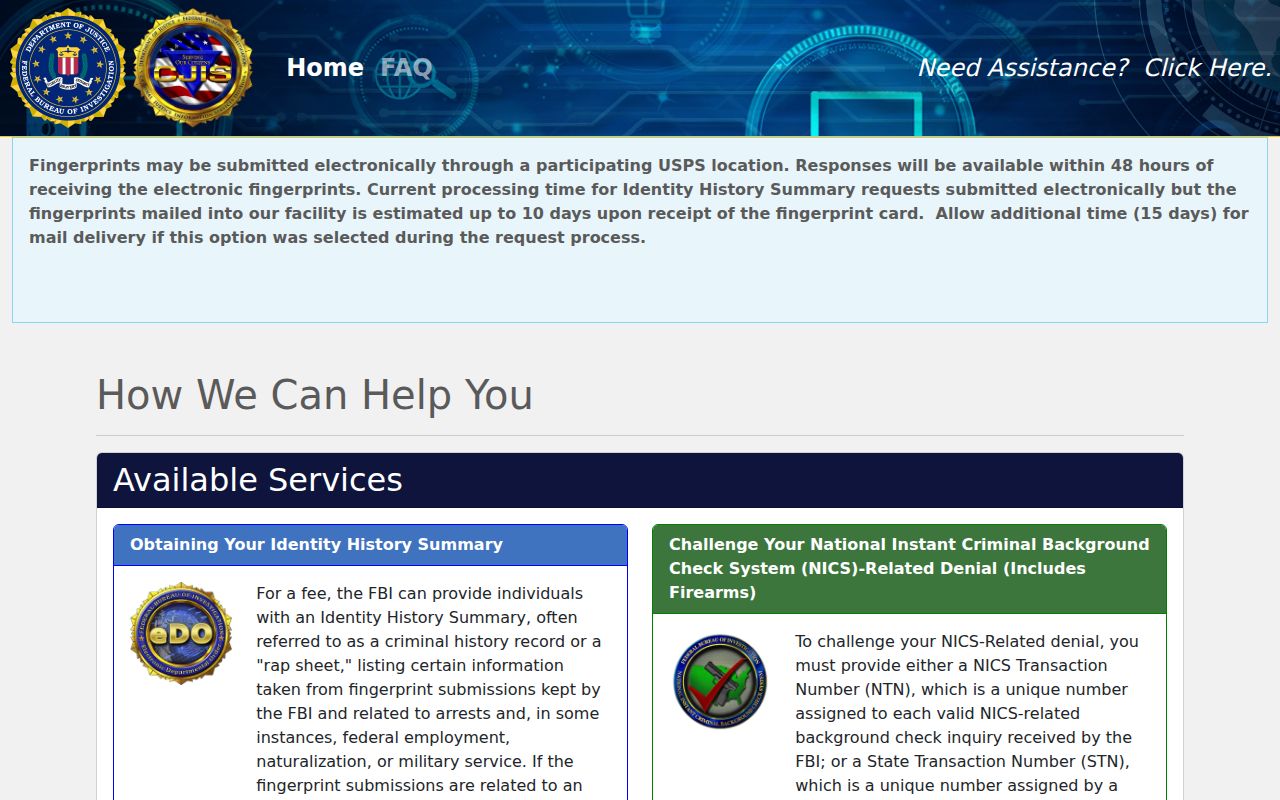
This contrast keeps a fingerprint history from being mistaken for the clerk's charge documents, motions, and judgment.
Access Rules for Case Records
G.S. 7A-109 governs public inspection and copying of court records in a clerk's custody, subject to sealed and confidential exceptions. Public status does not open every data field. Juvenile matters, expunged files, Social Security numbers, protected addresses, financial identifiers, victim details, and some minor information may be withheld or redacted. A record can therefore be public in part while protected content stays closed.
If an Avery County case does not appear, first check the spelling, county, date range, and court division. Then ask the clerk about an old file, an absent image, or a restricted status. Do not assume no case exists from one empty screen. The Judicial Branch's North Carolina expunction resource explains the forms and filing routes for qualifying cases.
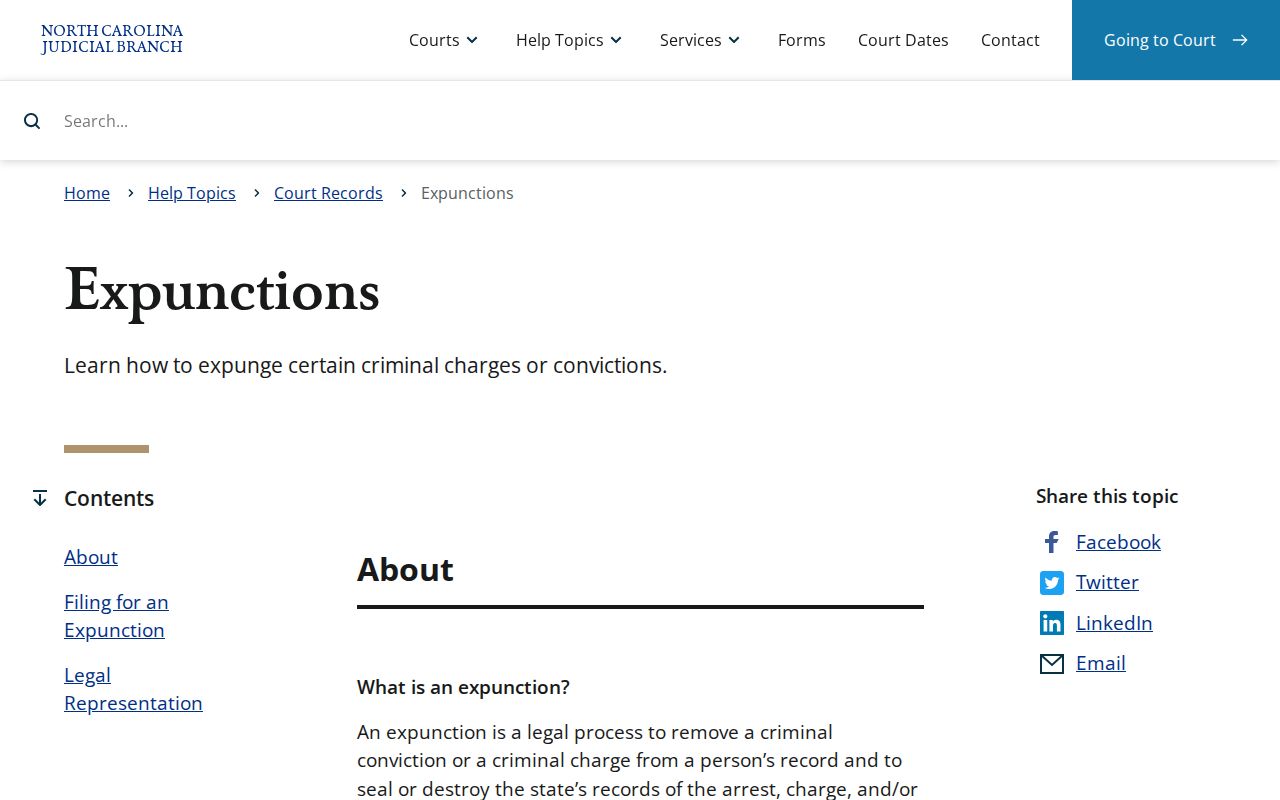
An expunction can remove qualifying Avery County records from ordinary public view, but eligibility and procedure depend on the controlling statute and court order.